Day 6 - Firearms Around Children & Family: Teach Safety, Set Examples, Protect Your Loved Ones
- Alan Pacheco
- May 29
- 5 min read
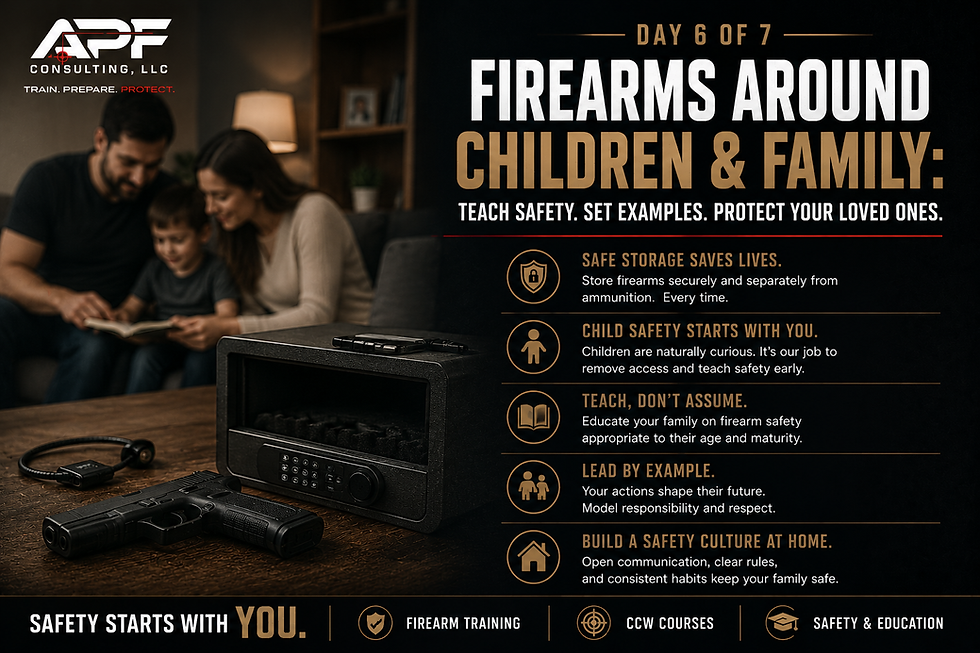
One of the greatest responsibilities that comes with firearm ownership is ensuring the safety of the people around you — especially children and family members.
Firearms may serve many purposes:
Personal protection
Hunting
Sport shooting
Recreation
Collection
…but regardless of why someone owns a firearm, safety inside the home must always come first.
At APF Consulting, LLC, we believe responsible firearm ownership begins with education, preparation, communication, and consistent safe habits. When firearms are present in a household, every adult has a responsibility to create an environment where safety is treated seriously every single day.
Children are naturally curious. Guests may not understand firearm safety. Teenagers may underestimate danger. Complacency can develop over time.
That is why responsible firearm owners must lead by example.
Today, we are going to discuss how firearm owners can build safer homes, teach children appropriate firearm safety principles, create healthy family conversations, and develop routines that help protect everyone in the household.
Safe Storage Saves Lives
The foundation of firearm safety around children and family begins with proper storage.
A firearm that is not under your direct control should be secured.
This is one of the most important responsibilities of firearm ownership.
Why Safe Storage Matters
Many accidental shootings involving children occur because a firearm was:
Left unsecured
Easily accessible
Improperly stored
Assumed to be “hidden well enough”
Unfortunately, children are often far more curious and resourceful than adults expect.
Responsible firearm owners understand: Hidden does not mean secure.
Recommended Safe Storage Practices
Safe firearm storage may include:
Gun safes
Lock boxes
Trigger locks
Cable locks
Biometric safes
Separate ammunition storage
The goal is preventing unauthorized access while maintaining responsible control over firearms.
Consistency Matters
Safe storage only works if it is done consistently.
Statements like:
“I’ll put it away later.”
“Nobody will touch it.”
“It’s only for a minute.”
…create opportunities for tragedy.
Responsible firearm owners secure firearms every time.
Children Are Naturally Curious
Children learn by exploring.
If they know or suspect firearms exist inside the home, curiosity may eventually lead them to investigate — especially if safety conversations never occur.
This is why education matters.
Teaching Basic Firearm Safety Early
Children should be taught age-appropriate firearm safety principles as early as possible.
One of the most widely taught safety messages for young children is:
Stop
Don’t Touch
Leave the Area
Tell an Adult
These simple steps help children understand that firearms are not toys and should never be handled without adult supervision.
Education Does Not Replace Supervision
Even if a child has received firearm safety education, firearms should still remain securely stored.
No amount of education replaces proper adult responsibility.
Children should never have unsupervised access to firearms.
Lead By Example
Children learn more from what adults do than what adults say.
If adults treat firearms carelessly, children may begin viewing unsafe behavior as normal.
Responsible firearm owners should model:
Safe handling
Muzzle discipline
Trigger discipline
Respectful behavior
Emotional control
Proper storage habits
Everyday Habits Matter
Simple actions leave lasting impressions on children:
Safely securing firearms after use
Following range safety rules
Speaking responsibly about firearms
Avoiding reckless behavior
Staying calm during stressful situations
Responsible firearm ownership should always be demonstrated through professionalism and discipline.
Communication Builds Safer Homes
Many families avoid conversations about firearms because they feel uncomfortable or unsure how to approach the topic.
However, silence often creates confusion, curiosity, and misinformation.
Open communication helps build safer environments.
Discussing Firearms With Family Members
Responsible firearm owners should ensure household members understand:
Basic safety expectations
Safe behavior around firearms
Emergency procedures
Storage rules
Boundaries regarding firearm access
These conversations should remain:
Calm
Honest
Age-appropriate
Respectful
Avoid Fear-Based Conversations
The goal is not to scare children or family members.
The goal is building understanding, respect, and safe habits.
Firearms should be treated seriously — not glamorized, ignored, or treated casually.
Teenagers and Firearm Safety
As children grow older, firearm safety conversations should evolve as well.
Teenagers often face:
Peer pressure
Curiosity
Social influence
Increased independence
Exposure through media or friends
Responsible firearm owners should continue reinforcing:
Safety expectations
Accountability
Emotional maturity
Decision-making
Respect for firearms
Mental and Emotional Responsibility
Teenagers should understand that firearms are not:
Toys
Status symbols
Tools for intimidation
Solutions for anger or frustration
Safe firearm ownership requires maturity and emotional control.
Guests and Visitors Matter Too
Many firearm owners focus only on immediate family members while overlooking visitors and guests.
Questions every firearm owner should consider include:
Do guests know firearms are present?
Could children visiting the home access firearms?
Are firearms secured during gatherings?
Could someone unfamiliar with firearms mishandle them?
Responsible firearm owners plan ahead and eliminate unnecessary risks whenever possible.
Building a Safety Culture at Home
Firearm safety should not feel like an occasional conversation.
The safest households build consistent routines and expectations that become part of everyday life.
What a Safety Culture Looks Like
A strong home safety culture includes:
Consistent storage habits
Respectful communication
Ongoing education
Clear boundaries
Accountability
Calm decision-making
Safe handling practices
Safety becomes part of the household standard.
Consistency Builds Trust
Children and family members often feel more comfortable around firearms when safety expectations are clear, calm, and consistent.
Responsible firearm ownership creates stability — not fear or unpredictability.
Emotional Control and Family
Responsibility
One of the most important responsibilities firearm owners have is maintaining emotional control inside the home.
Firearms should never be handled:
During arguments
While emotionally overwhelmed
Under the influence of alcohol or drugs
Recklessly
To intimidate others
Responsible firearm ownership requires maturity and discipline.
Secure Firearms During Difficult Times
Life can sometimes involve:
Stress
Anxiety
Emotional hardship
Family challenges
Responsible firearm owners should recognize when additional precautions may be appropriate, including securing firearms more carefully during difficult periods.
Safety always comes first.
Teaching Respect, Not Fear
Responsible firearm education should focus on:
Respect
Responsibility
Awareness
Safety
The goal is helping children and family members understand:
Firearms are serious tools
Unsafe behavior has consequences
Safety habits protect lives
Responsibility matters
Knowledge and communication help reduce dangerous curiosity and unsafe assumptions.
The Importance of Continued Education
Firearm safety conversations should continue over time.
As children grow and situations change, families should revisit:
Storage procedures
Safety rules
Expectations
Emergency plans
Safe handling practices
Responsible firearm ownership is an ongoing commitment.
Final Thoughts
When firearms are present inside a home, safety must always remain the highest priority.
Responsible firearm owners understand that protecting loved ones requires:
Safe storage
Communication
Education
Consistency
Emotional maturity
Leadership by example
At APF Consulting, LLC, we believe firearm safety begins at home and grows through discipline, awareness, and responsible behavior.
Because protecting your family means more than owning a firearm.
It means creating a culture of safety around it.
🎯 Safety Starts With YOU.
— APF Consulting, LLC


Comments